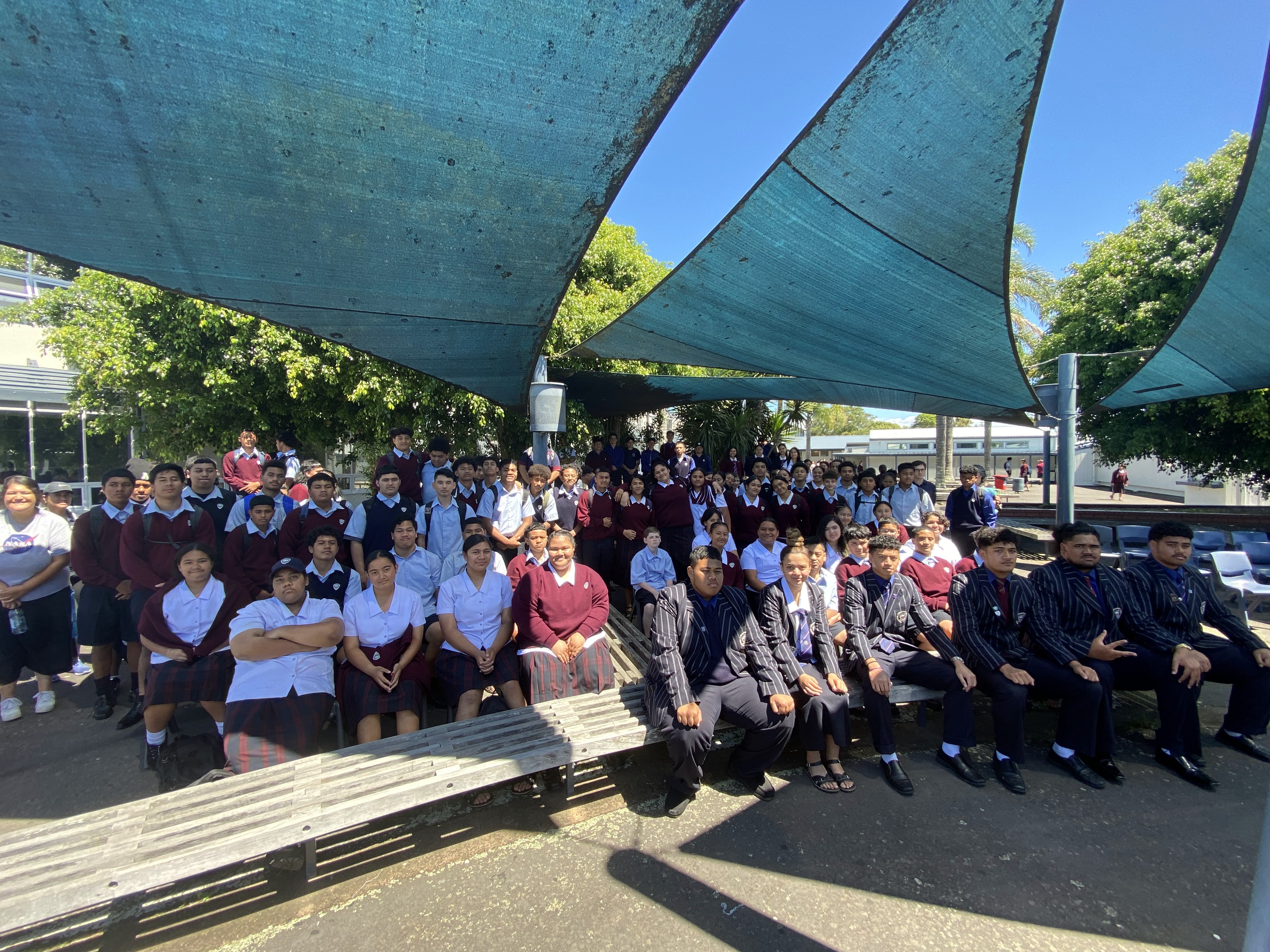
Sunday, April 30, 2023

Week 2 Term 2 - English Department: TOD: Planning for NCEA Level 1 English 2024 (May 1 - May 2)

Preparing for the new changes to NCEA and the curriculum refresh is a focus for the English Department. For our most recent TOD, we used this time to focus on the changes to NCEA Level 1 English program and to continue our discussion around the new achievement standards. We spent time revisiting the new achievement standards that we covered in 2022 and also explore the new external assessments that are on offer. We were able to do this as well as flesh out a draft plan for our new NCEA Level 1 English program 2024. Change can be challenging thing if one is not prepared, so using this time to prepare for next year and to discuss what we want to do with the new program was exciting for all of us. I am going to reflect on how what we covered and what our next steps are. 

English Department TOD May 1 2023


Our journey so far (NCEA Changes 2024)

We started our journey towards the NCEA refresh in 2022. Over the course of two TOD (Term 2 and Term 4) we looked at the two out of new achievement standards. I reflected on this last year (see Alby Blog Entry - 08/24/22 & Alby Blog Entry - 13/11/22). During this time we were able to unpack two achievement standards (internal assessments) - 1.1/1.2. As a department, we spent each session going through both assessments and unpacking it focusing on five areas which we have documented and kept on file as we are starting to create new resources and unit plans for the achievement standards. The five areas that we focused on and explored were: 

What is the assessment?

Key words and concepts from the assessment

Opportunities

Potential barriers

Next steps

Focusing on each area allowed us to understand the assessment more. We were able to flesh out what the assessment and look at the opportunities namely connecting what we are currently doing to see if it fits under the new umbrella of assessments. We spent some time to revisit the two internal assessments that we covered in August 2022 and November 2022, to see what we have done and what our next steps are. It is important to reflect and look back on what you have done, especially when you are preparing for change, to appreciate the journey. Here is a summary of what we have covered for both new achievement standards - 1.1 and 1.2. 

1.1: Demonstrate understanding of how context shapes verbal language use (5 Credits)

Texts:
  • Extended Text Study: Of Mice + Men (John Steinbeck)
  • Local iwi stories
Assessment:
  • Formal Writing: Response to text essay, Text review
  • Create a visual text: Slideshow presentation on the text
  • Speech: Oral presentation that coincides with the slideshow
Other:
  • Genre study - look at texts that fall into the same genre as Of Mice + Men (connect to assessments above) 
  • Reality context - look at other texts relevant to student experiences (cultural) and connect to the assessments above

1.2: Create a verbal and visual personal response to an independently studied text (5 Credits)

Texts:
  • Visual Text Study: Edward Scissorhands (Tim Burton)
Assessment:
  • Formal Writing: Response to text essay, Text review
  • Create a visual text: Slideshow presentation on the text
Personal Responses
  • Creative Writing + Create a Visual Text: Write a sequel to the text etc (creative writing) and use book creator to make an actual book to accompany (create a visual text)
Other:
  • Teacher to teach 4 texts
  • Students to choose ONE that they want to study
  • Students to complete an assessment (multi model)


Unpacking the new external assessments: 1.3 and 1.4

The English Department spent Week 1 Term 2 unpacking the new external assessments (1.3 and 1.4). We used to TOD to feedback about the external assessments. Much like what we covered last year, the department looked at the same five areas when unpacking the assessment - 
  • What is the assessment? 
  • Key words and concepts from the assessment
  • Opportunities
  • Potential barriers
  • Next steps
The department were broken up into two groups - each group looking at the new achievement standards (1.3 and 1.4). I will provide a summary of what each group shared for the new external assessments. 

1.3: Mr Spruyt, Mrs Williams + Mr Hoosein

This is an external assessment worth 5 credits. The assessment will run in Term 3 assessment. We are encouraged to use Term 1 + Term 2 to prepare the students for the external (use 1.1 to help prepare the students) 

Assessment:
  • Writing Portfolio - Write two essays - response to two texts (studied texts, articles, speech poetry, etc) based on two prompts
  • Teacher gets the prompts @ the beginning of Term 3. Offer prompts to students and they work on it during T3 
  • Students work on the assessment for 8 weeks and submit their final two pieces (350-500 words) in week 9
1.4: Ms Latu, Ms Kolo, Mrs Harde + Mrs Ahmed

This is an external assessment worth 5 credits. The assessment will take place in Term 4. 

Assessment: 
Integration of two externals - unfamiliar text - 1+ 2 sections AND Studied written/visual text essay - x1 Essay
2 hours to sit two sections (under exam conditions online) tagged for literacy
The assessment will take place in Term 4. This assessment echoes the current external assessment that we currently do.

This was a great session as each member of the department shared their understanding of the assessment and what it can look like for us. 

Planning our NCEA Level 1 English Program 2024 (first draft)

Once we revisited the internal assessments and shared information on the external assessments, we started to plan our first draft for our NCEA Level 1 English program 2024. We reviewed the four new achievement standards and had a look at what we covered so far. 

Summary of the new achievement standards

From here we discussed and planned for 2024 with the new achievement standards. We discussed where each standard should be placed, what text we want to study and what approach we will do in terms of the assessment with our akonga. 

Draft Schedule for NCEA Level 1 English 2024

This was a great session as we were able to collaborate and plan our year for our NCEA Level 1 akonga. We were had a good discussion around the texts that we want to cover. Initially I wanted to use the same texts as we already have the units in place. However, it was clear in our discussion that the new achievement standards needed new texts that not only supported the assessment but more importantly aligned with our akonga and community. 

Next Steps: 

  • We are going to look for appropriate written texts for 1.1. There was a discussion around changing the text focus (we are currently using John Steinbeck's 'Of Mice and Men'). Our homework over this term is to find a text or texts (collection of short texts) to use for 1.1. We are going to read through The Platform: The Radical Legacy of the Polynesian Panthers - Melani Anae and see if this the right text for 1.1.
  • Our next lot of homework (next step) is to watch the film Muru. We will discuss the film @ our next department meeting (Week 4) to see if this film is suitable for 1.2. 
  • We want more time to plan our units for each new achievement standard and specifically for each text. We have requested for time to do this during Term 2. We want to refine our plan so that we can lock in the final details at our next TOD (slated for Term 4). 
  • The new literacy requirements are around the corner as well. We are going to do a pilot of the new literacy standard with a select group of Year 10 students in Term 4. We would like to use the time during our hybrid learning day (Monday) to work with this group and prepare them for the literacy standard. We have selected students who are at the top end of Asttle Writing Level 4 (4P - 4A) and lower end of Asttle Writing Level 5 (5B). 

Sunday, April 23, 2023

Week 1 Term 2 - English Department: Term 1 Review + Plan for Term 2 (April 24 - April 28)

Term 1 was a busy, full on, challenging and rewarding time for the English Department. I would firstly like to thank the team for their work, commitment, support and awhi that they have shown to our akonga in Term 1. The work and time that you have invested into your akonga and into your teaching has set the tone for 2023. I am very grateful and humbled to work alongside you, thank you!

Term 1 was another full term. With the implementation of Hybrid Learning on Mondays, we knew that we had a short window to get through the learning program with our Year 10, 11, 12 and 13 English students. We enjoyed our Staff PLD sessions on Monday, we particularly enjoyed our time with Dr Rae Si’ilata and listening to our COL teachers. We were not able to meet as regularly as we would have liked but managed to find time during Hybrid Learning on Monday, to meet and check in with each other. I would like to acknowledge Ms Anahina Latu for her leadership this term especially when I was away, she stepped in and took care of the department. I would also like to acknowledge Ms Amber George, Mr Marc Milford, Ms Vivienne Jenson-Jones and Dr Jannie for their work and support for the English Department this term.

This term we were able to achieve the following things:

1) Complete our teacher inquiry, goal setting and plan for our Professional Growth Cycle - it is always exciting to see what each department member’s inquiry is going to be for the year. I am excited to journey with the team through their individual inquiries and goals for 2023.

2) Establish + implement our Junior and Senior English Program - We have collaborated and agreed on a program for both our Junior and Senior English students. We have implemented the program and so far so good. We have also implemented our plan for our Term 2 which we will put into gear after the school holidays.

3) Asttle Writing + PAT Reading Junior English - We completed our Asttle Writing and PAT Reading tests with our students. There are a few students who did not complete the Asttle Writing, we are hoping to see that number decrease with follow up/catch up sessions with Mr Milford.

4) Close Viewing Assessment (NCEA Level 1, 2 + 3 English) - We are almost at the end of completing our first internal assessment with our Level 1, 2 and 3 students. We have a few students across our senior school cohort who have completed the assessment successfully.

5) External Moderation 2022 - We were really pleased with the results from the external moderation for our assessments (91478 - Connections - Level 3 + 91480 - Close Viewing - Level 3). Our external moderation was successful and this highlights to us that our marking, critique and moderation process is on par nationally. Well done team!

We will now review our Term 1 Junior and Senior English program.


JUNIOR ENGLISH TERM 1 REVIEW: 


Term 1 Junior English Program
Our focus for Year 9 and Year 10 English was extended text. We spent the term going through our first text study for 2023. Some of the texts that were covered this term were:
  • Roald Dahl’s - Boy (Year 9 English)
  • Andy Mulligan’s - Trash (Year 10 English)
Following the novel study, our students worked on our CAT (Common Assessment Task) Formal Writing. The formal writing tasks varied - from response to text type essays to text review essays. The students were engaged with the formal writing CAT and we are pleased with the results. We are hoping to close the loop with students who were not able to complete it during the first week of Term 2.

Below are some examples of the formal writing from our akonga. Their understanding of the text and their opinion on how they felt about the text are things that we really appreciate in their writing.
Student exemplar 1 - Formal Writing Tamaki College Term 1 


Student exemplar 2 - Formal Writing Tamaki College Term 1


SENIOR ENGLISH TERM 1 REVIEW: 

Senior English Program Term 1

Our focus for Term 1 for our NCEA Level 1, 2 and 3 students was the visual text study accompanied by the Close Viewing Assessment. For our NCEA Level 1 students, the visual text study we focused on was Tim Burton’s ‘Edward Scissorhands’, NCEA Level 2 the visual text we studied was James Napier Robertson ‘The Dark Horse’ and for our NCEA Level 3 student’s we looked at Ron Howard’s ‘A Beautiful Mind’. 

The focus assessment for our Level 1, 2 and 3 students for Term 1 was Close Viewing. We knew that we had a short time frame to get through the assessment especially with Hybrid Learning impacting our face to face time with our students. We found the Wednesday timetable (7 periods) useful for us and our Year 11 students as we see them three times on a Wednesday. We made sure to maximize our time with our Year 11 students on Wednesdays. 

Given the interruptions to Term 1 and all the demands that our Year 11, 12 and 13 students have with extra curricular activities (school closure due to the flooding and Cyclone Gabrielle, Polyfest etc) we knew that we had to change the goal post for our internal assessments. We set out for Week 10 to close the loop on our internal assessments. We have now agreed on moving the deadline to the end of Week 1 Term 2, to give our senior students time during the holidays to complete their assessments. S
  • NCEA Level 1 Close Viewing Results - 24 completed/passed as of April 6 2023.
  • NCEA Level 2 Close Viewing Results - 27 completed/passed as of April 6 2023.
  • NCEA Level 3 Close Viewing Results - 3 completed/passed as of April 6 2023.
We are aware that this term had its fair share of interruptions. We are aware of the gap that these interruptions have created and we know what we need to do to plug that gap. We have moved our goal post to the end of Week 1 Term 2 - for our students to complete their term 1 assessment. We are hopeful that the extra time during the holidays will give our students the best opportunity to complete their assessments.

Student exemplar 1 - NCEA Level 1 English Close Viewing Term 1

Student exemplar 2 - NCEA Level 3 English Close Viewing Term 2


ENGLISH DEPARTMENT GOALS TERM 2


As a department, we like to discuss what our priorities and goals are. Sometimes our priorities change as we journey through the term but we try to stick to our goals as best as we can.

Below are some of the goals that we would like to work towards in Term 2.

Literacy Strategies - We spent a significant amount of time throughout 2022 working on delivering effective literacy strategies to our Year 9 and Year 10 students. We hope to continue this partnership with Dr Jannie and Mr Milford, hopefully venture out on our own and share what we have learned to our junior students.

Unpacking new Literacy Standards/NCEA changes - We have started to unpack the new NCEA Level 1 internal assessments. We hope to continue looking at the new literacy standards and hopefully do a trial run with our Year 10 students this year. I would like to see us unpack and start planning 2024 for our NCEA Level 1 program as the changes will impact our Level 1 English program. The hope is to start this journey when we have our TOD in Week 2.

The outline of our TOD for Wk2 T2. 

Closing the gap with internal assessments - We have made a good start with our senior akonga. We want to continue to get our students over the line with their internal assessments. We know that a lot of our content needs to be driven this term and we are hopeful that we will be able to get our students through their internal assessments.    

We know that our goals will change as we go throughout the term. For now, our focus is to develop and implement our literacy strategies for our Year 9 and Year 10 students. We also want to continue in developing our plan for the new NCEA Level 1 changes which will be fully implemented next year. 

JUNIOR + SENIOR ENGLISH PROGRAM TERM 2: 

The Junior English Program for Term 2 is centered around a short text study (short stories, poems, songs, sonnets). The common assessment task that will accompany the short text study is creative writing and create a visual text. We also have our mid year junior exams that will take place at the end of the term. 
Junior English Program Term 2

The Senior English program for Term 2 is centered around the extended text study. We will reading the text from Week 2 - Week 5 across our Level 1 - Level 3 classes. The assessments associated to the extended text study are our major written assessments (Creative Writing, Formal Writing, Connections Report and Reading Responses). We want to ensure that our students complete the extended text study and assessments by the end of Week 10. 

Senior English Program Term 2

Sunday, April 2, 2023

Week 10 Term 1 - Teacher Practice: Inquiry for 2023 (April 3 - April 6)

What is my Teacher Inquiry for 2023?

Teacher inquiry goals are an important part of teacher practice. TKI states that "The purpose of teacher inquiry - It provides an opportunity to focus on identifying successful approaches for improving learning outcomes for all learners, in particular those that may be target students." Term 1 has been a busy term and I have not given myself time to really think about my teacher inquiry. Since things have started to slow down, I have had time to really think about what I want to look into for Teacher Inquiry for 2023. Typically my goal changes throughout the year but for this year I would like to stick to my inquiry. My teacher inquiry for 2023 is to see - 

How I can help improve reading and writing engagement with my Year 9 students through creating mixed ability groups within my Year 9 class. There are two groups who I have in mind with my inquiry:

My Level 2-3 Reading Group (x6 students):

  • V.F - L3
  • H.L - L3
  • A.F - L3
  • J.R.V - L3
  • N.M - L1
  • O.P - L2
Maori students (x7 students):

  • T.M - L3
  • T.R - L2
  • T.C - DNS
  • M.D - L4
  • K.P - L5
  • K.T.O.M - L4
  • M.C.N - L3 

9TKl in action during Hybrid Learning on Monday (Term 1)

The purpose of this inquiry is to see what I can do in the classroom to help my akonga (specifically my Level 2 - 3 Reading Group + Maori Akonga Group) engage with writing and reading. 'Engage' is defined as 'to participate or become involved in'. In talking with my akonga - across the class in 9TKl - I have found that most of them only engage with reading and writing when they are in class because 'they have to' and because 'it is a requirement'. Furthermore, they do not see or understand the value in literacy particularly reading and writing. I hope that through my teacher inquiry I can help my akonga enjoy writing and reading and even more so, see themselves as capable and competent readers and writers. Strategies that I want to implement that will help support my teacher inquiry


Student Profiling (teacher directed)

Our COLS shared their teacher inquiry for 2023 at our Staff PLD in Week 9. A huge part of their inquiry was student/akonga profiling. We do this already in the English Department through our tracking sheet system. With my inquiry I hope to use the tracking sheet in a way that will help me understand my akonga well. 
My tracking sheet for 9TKl
For my Level 2 - 3 students and Maori group, I want to add columns in my tracking sheet that links to the student's own reflection on how they view reading + writing (in the form of an informal letter etc), links to their cultural connections (beyond nationality - what is their iwi, nu'u or kolo). This information will help my lens on who my students and understanding what they bring to the classroom. 

Akonga Learner Profile (student directed)

TKI states 'A LEARNER PROFILE GIVES STUDENTS AN OPPORTUNITY TO: Learner profiles are created by the student, often with the support of those that know them best. Through creating a learner profile, students develop a deeper understanding of who they are as learners – reflecting on what motivates and challenges them when learning." I have used a few resources (shared from colleagues + ones that I have created) where I get my students (mainly Year 9 - Junior English) to reflect on their learning and what their goals are. 
STAR Reading Reflection (from Mrs Suipi-Latu)

Term Academic/Personal Reflection 
This has been helpful in that the students understand where their journey is and what they need to do to get to their next step. This is a heavily scaffolded activity and one where I get the students to reflect and write independently then we have a discussion (one on one discussion) to go through their learning journey and goals for the term. Going forward (with my inquiry in mind) I will revamp the reflection documents so that it is tailored to writing and reading specifically. 

Reading + Writing Groups (teacher + student directed)

I started grouping my students into reading ability groups in 2021 and 2022. I did this because I found that the students felt comfortable discussing and reading in groups that were reflective of their reading ability and level. I am going to continue doing this with my focus class. I will group then according to their PAT Reading levels - the readings will be the same across all reading groups but the comprehension and response to text work will be tailored differently for each group. I saw the benefits of this last year with the student engagement increased during our reading intensive weeks. 

I look forward to seeing how my teacher inquiry unfolds for 2023. I also look forward to posting about this! 

Monday, March 27, 2023

Week 9 Term 1 - Totara House: Refining + Defining our House Values for 2023 (March 27 - March 31)

Since 2021, Totara House have always been driven by their own set of values. The reason for this is to give the student's agency, a sense of purpose and identity in being a part of Totara House. I wanted the students to feel like they are part of something and it is something that they can see themselves in. In 2021 our House values were Teamwork, Confidence + Unity. 2022 our values were Family, Respect and Resilience. I believe that student voice, buy in and agency helps to create a culture that is positive, empowering and mana enhancing. In the context of the House system, I believe that this approach helps to build this very culture and it helps to give the students a sense of identity and vision. 

Totara House @ COS 2023 (Term 1)

As stated in a blog from 'A Principal's Reflection' "Student agency is about empowering kids to own their learning (and school) through greater autonomy. It is driven by choice, voice, and advocacy." The whole idea around the House values and how we (as Totara House) define what our values are is centered in student agency. I understand the power that student voice has in shaping culture in the classroom and I know this has a positive impact in how I want to shape the House I look after. 

Totara House Assembly Term 1

Student feedback (face to face) has been the approach that we have taken in Totara House. The same approach that the student leadership team took in 2021 is the same approach that the student leadership team has taken in 2023. During Term 1, the House leadership team (Anika, Christian, Mario, Alo, Kosini and Danny) visited the 6 classes in our House (9TKl, 10TGu, 10TNi, 11TPt, 12TKh + 12TTt) during Week 4 and Week 5. The leadership spent time in each house during the morning mentoring session and asked them "What do you want Totara House to represent?" This is the same question that we have used in 2021 and 2022.  

Totara House Student Feedback 2023
The leadership used the time during the mentoring session to talk to the students about what they want Totara House to represent and this was also an opportunity for the leadership team to introduce themselves and get familiar with their House. This time is important for the leadership team and the students as it is a chance for them talk about what their vision, hope and goals are for the House. It gives them a sense of responsibility, accountability and belonging to the House. 
Some of the Totara House Leadership Team leading chant practice
From here the leadership team and I met and spoke about the feedback. We went through the feedback and looked for the common values across each House. Across our Year 9 to Year 12 classes, the values that were a common thread across the classes were gratitude, integrity and leadership. The leadership decided to create a quote that encompassed the meaning of all three values. The team decided to share the three values and the quote at our most recent House Assembly - to show the students what they did with their feedback and to bless their new goal and values for 2023. 
Totara House Values 2023
Our goal from here is to focus on the values through our House Assemblies, mentoring sessions and house activities. I look forward to reflecting and documenting how this goes our Totara House whanau. For the end of Term 1, we will be focusing on the value of Gratitude and hopefully we will use the rest of the year to explore our other values. As we have done over the last two years, our house values become our reference point and pillar that we lean into. It helps to give all involved - our mentors, students, leaders - a focal point to work towards. I am excited to see how we use and express our House values for 2023. 

Sunday, March 19, 2023

Week 8 Term 1 - Teacher Practice: Tātaiako: Cultural Competencies - Understanding what it is (March 20 - March 24)


Staff PLD Monday March 20

We had the pleasure and privilege of having Dr Rae Si'ilata present at our Monday morning Staff PLD (Week 8 Term 1 Monday March 20). The focus of the PLD was an introduction to the Tātaiako: Cultural Competencies for Teachers of Māori Learners document. 

Tātaiako - Click on the image to access the document

Tātaiako: Cultural Competencies for Teachers of Māori Learners is about teachers’ relationships and engagement with Māori learners and with their whānau and iwi. Designed for teachers in early childhood education (ECE) services and in primary and secondary schools, it will support your work to personalise learning for, and with, Māori learners, to ensure they enjoy educational success as Māori. Dr Rae Si'ilata along with her colleagues from her Va'atele Education Consulting team spent the morning with us (Tamaki College Kaiako) introducing us to the document and the key cultural competencies that make up the framework. I left this PLD feeling inspired and motivated to LEARN more about my Maori akonga - really get to know them and understand their whakapapa, their story, their history - in a way that will be meaningful and beneficial to their achievement. In this post I am going to reflect on my key take away and gems from the PLD. 


Maori akonga vision for Tātaiako

Knowing our learner is not just about knowing their story but it also about knowing their hopes and dreams. Dr Rae shared the vision - a vision that is direct from Maori akonga - on how they see Tātaiako for them in their learning and in school. Here is some of the highlights from a section that Dr Rae started with (that encapsulates akonga voice in relation to Tātaiako) entitled 'Mataitipu - Vision for Young People'

"Our well being is connected"

"We have a shared responsibility to each other"

"We engage in learning that is meaningful to us"

"We know our world is connected"

"Language, culture and identity is at the center of everything that we are doing"

Their vision and what they want from this approach, this kaupapa - resonated with me. Most of the time we as teachers drive our learning intention, objective and vision with our akonga- which is good, we are in a position where our leadership and direction is needed. In this space, in this context - with Tātaiako at the center - especially as non Maori - it is imperative that I keep this at the forefront when it comes to my Maori learners. This can be achieved through talking to them - seeing what they want, understand who they are and design my learning program around their strengths and what they need. 


Reflecting on our own journey

Venturing into the world of Tātaiako and Tāpasa as kaiako can be daunting. Sometimes you feel that what you know is not enough and that there are so many gaps that you need to fill. Dr Rae posed some quick fire questions that she wanted us to discuss and reflect on. I enjoyed this as it highlighted what I know but also, areas of opportunity where I can learn, grow and share when it comes to Tātaiako. Below are the questions Dr Rae shared and my answers. 

1) Who are manawhenua in your rohe? What words come to mind when you think of their stories and history? 

The manawhenua in Glen Innes is Ngati Paoa. I learnt through this our local curriculum PLD sessions that we had in 2022 and specifically through the hikoi we took in Term 4 2022 (see Alby's Blog Entry - 13/11/22

2) Of the Maori whanau is in your class and in your school, what hapu/iwi do they whakapapa to?

I honestly do not know. I am going to assume that it is Ngapuhi but I want and need to find out. I will talk to my Maori learners and see what they know (even if it is the name of their Marae) and we can find their iwi from there online. 

3) What ethnicities are other akonga/tamariki in your class?

Cook Island, Tongan, Samoan, Niuean, Malaysian and many are mixed raced too. 

4) Can you name any culturally located relational practices that you utilize in your teaching and learning provisions?

In my classroom, the style and approach I have is very much traditional in the typical teacher sense. In a different setting, such as Samoan group - I use this space to explore and exercise culturally located practices that are appropriate in this context. 

What I learnt from this discussion for our Maori and Pasefika akonga and kaiako - we are a proud of colonization. Colonization has brought good things to our culture but at the same time it has had a huge impact on both Maori and Pasefika culture, identity and language. 


Exploring the Tātaiako Cultural Competencies

I enjoyed this part of the PLD. Dr Rae and her team took us through the key cultural competencies and introduced us to the idea behind each one. There are five key cultural competencies. 

  • Wanaga - Participates with the learners, whanau and community in dialogue to benefit Maori learner's achievement. 
  • Whanaungatanga - Engage in respectful working relationships with Maori akonga, whanau, parents and community. 
  • Manaakitanga - Respect towards Maori belief, language and culture.
  • Tangata Whenuatanga - Affirms Maori learners as MAORI.
  • Ako - Take responsibility of learning

Dr Rae enforced that these cultural competencies value and meaning is something that is beyond Tātaiako. Tātaiako have taken these competencies and have customized it to fit the ideology and spirit of Tātaiako. We spent time going through each competencies and then we did a group exercise where we had to match the competency with the akonga and kaiako profile. 

PLD PLuG group activity for Tātaiako

I thoroughly enjoyed this PLD. Tātaiako is an encouragement for kaiako to see our Maori learners/akonga for the people that they are. To see them, understand them and value the people, whanau, awa and iwi that they carry with them. Tātaiako is also about opening up the lingustic space in the classroom and allow akonga to use all the cultural and language expertise that they bring to the classroom as a resource. 

Dr Rae left us with a beautiful whakatauki - "Mā te ngākau aroha koe e ārahi" which translates into "Let a loving heart guide your decisions". May everything that we do as kaiako be driven by love. 

Action steps going forward for Tātaiako: 

  • I intend on using my Year 9 class - 9TKl - as my focus point for Tātaiako.
  • I want to focus on the cultural competency of 'Tangata Whenuatanga'. I would like to engage with them to see what they know about their iwi
  • Then use this as a springboard to create their own autobiography/written assessment where they talk about themselves. This could be used as both a written and oral text. 
  • Hopefully I can use this model with my Pasefika/other learners 
  • Start Week 10 T1 + carry into Wk1 T2

Sunday, March 12, 2023

Week 7 Term 1 - Tapasa: Polyfest 2023 (March 13 - March 17)

Every Polyfest season comes with it's own rewards, trials and challenges. This year's ASB Polyfest was brought forward in early March (typically scheduled around the end of March). Which mean that the time to prepare and complete a performance set for the competition was reduced to 3 weeks. It was an extremely tight time frame to organize items, music, musicians, material and uniforms on top of managing the students. As with every year, there is an entire community who comes in to help make everything happen. 

Tamaki College Tongan, Samoan + Cook Island Group preparing for Polyfest 23
This year I had the privilege of coordinating all the cultural groups for Tamaki College in preparation for the ASB Polyfest 2023. I saw first hand the time, heart, commitment and love that not only the students and their parents put into the experience, but the tutors and teachers who put in so much love to ensure that the experience is successful. As a tutor (Tamaki College Samoan Group) I understand the commitment and the pressure that is placed on everyone involved, so I appreciate everyone who was involved in this year's campaign. Being involved in Polyfest requires a lot of time, patience and love. I would like to acknowledge our awesome Tamaki College SLT as well as the Polyfest TICs - Mr Moyes, Mr Tuaru Temu, Ms Latu, Mrs Suipi Latu, Mrs Telefoni, Mr Hingano, Ms Apelu, Mrs Lote-Fepuleai and Mr Niko for their tautua and alofa during this year's Polyfest season. I am going to reflect on the journey for the Samoan Group and how this year's campaign went for them. 

SAMOAN GROUP 2023


Tamaki College's Samoan Group 2023 is made up of 43 students (our smallest group to date), supported by our tutors Millie Mara Oti (former student + performer in the Samoan Group), Roni Kamu Wright (former student + performer in the Samoan Group), Pene Ueta (long time tutor + composer for Tamaki College Samoan Group), Kevin Savili (former student + performer in the Samoan Group), Simon Savili (former student + performer in the Samoan Group), Norman Fogavai (former student + performer in the Samoan Group) and Malulu Faaui (former student + performer in the Samoan Group). Lead by the teacher's in charge - Ms Dorothy Apelu and myself - with the support of our colleagues Mr Niko and Mrs Lote-Fepuleai. 
Tamaki College Samoan Group 2023 with the tutorship team
Our performers were from across all year levels - with one Year 9, nine Year 10s, eight Year 11s, twelve Year 12s and thirteen Year 13s. Our performers were largely new to the competition and to performing in general. So we had our work cut out for us. In three weeks we taught 6 items to the students: 
  • Ulufale (Entrance)
  • Mauluulu (Group dance) 
  • Pese o le aso (Song of the day)
  • Sasa (Group dance)
  • Taualuga (Solo performer)
  • Ulufafo (Exit)
Samoan Group 2023 rehearsals
Rehearsals were everyday after school from 3:00pm - 5:30pm (finishing at 6:30pm the week of). We also practiced on Saturdays starting from 9:30am - 2:00pm. We were able to complete the set the weekend before Polyfest week - which was good as it gave us time to polish and edit the set where we saw fit. I felt the time pressure this year and I was not able to edit as much I wanted to as we needed to get through the set and tighten up what we had already taught the students. I am grateful for this experience though as it has taught me that if you really put your mind to something and you have the right people in your circle, you can make anything happen. I am extremely proud of the student's effort, commitment and service this year. They really dug deep especially the week of Polyfest. I am really happy with the final performance as it was clean, tidy and kept to our Tamaki College Samoan Group style. 
Tamaki College tutorship team 2023 (former students/performers in the Samoan Group)
Consistency, maintaining our performance standard, striving for excellence on stage and ensuring that the students enjoy the experience is something that we have have always kept at the forefront of our kaupapa and heart. This starts with the teachers and tutorship team - making sure that we work well together (we have been working together since 2010) and this filters down to our students. I believe the success and integrity of this group is grounded in the ALOFA (which is the springboard for FAA'ALO'ALO + TAUTUA) that our team bring every year. We always say that every year is different - different students, different set, different energy - but the spirit and heart is the same. 
Tamaki College Samoan Group @ ASB Polyfest 2023
The competition of the festival is something that we enjoy - it keeps us on our toes and enables us to push the students to work and put their best forward. Even more so, it pushes us to bring our best creatively. The competition is something that we use a vehicle to push our students to do their best, in terms of winning - we drive the message that they have won already. They have won in terms of learning and growing in their culture, won in terms of stepping out of their comfort zone and doing something new, won in terms of doing something beautiful and meaningful as a team. We are grateful that every year since 2010, we have been acknowledged at the prizegiving. This year, we were placed 3rd for our togiga - aoga tuufaatasi tama ma teine - togiga - tulaga tolu. This was an awesome achievement for us and something that we are grateful for as we know how hard our competition is. This is something that we will add to our resume.
  • 2010 - 1st Place Ulufale (Entrance)
  • 2011 - 2nd Place Fuataimi (Conductor - Falaniko Liava'a)
  • 2013 - 2nd Place Overall (Co-Ed Section) 1st Place Taupou (Solo performance - Nive Isaako), 1st Place Equal Sasa (Group Dance), 2nd Place Fuataimi (Conductor - John Tuilata Lemalie), 3rd Place Ulufale (Entrance), 3rd Place Ulufafo (Exit), 3rd Place Mauluulu (Group Dance), 3rd Place Togiga (Uniform), 3rd Place Taualuga (Group song)
  • 2014 - 2nd Place Togiga (Uniform), 3rd Place Taupou (Solo performance - Laura I'u), 3rd Place Sasa (Group Dance), 3rd Place Maluulu (Group Dance)
  • 2015 - 3rd Place Pese o le Aso (Songs), 3rd Place Fuataimi (Conductor - Norman Fogavai)
  • 2016 - 3rd Place Pese o le Aso (Songs), 2nd Place Fuataimi (Conductor - Roni Kamu Wright), 2nd Place Taupou (Solo performance - Mui Niue)
  • 2017 - 3rd Place Pese o le Aso (Songs), 2nd Place Fuataimi (Conductor - Tim Fatialofa)
  • 2018 - 2nd Place Equal Pese o le Aso (Songs), 2nd Place Fuataimi (Conductor - Tim Fatialofa)
  • 2021 - 3rd Place Taupou (Solo performance - May Sinfea), 2nd Place Equal Taualuga (Group song), 3rd Place Equal Togiga (Uniform)
  • 2022 - 1st Place Year 13 Speech Competition - Samoan Stage (Maletina Niko)
  • 2023 - 3rd Place Togiga (Uniform)
Aoga Tuufaatasi Tama ma Teine - Togiga - Tulaga Tolu: Tamaki College
Finally I would like to acknowledge all of our akonga, their parents, our leaders (Aumau, Malae, Danny, Leilani + Adrienne) our Futaimi 2023 (Mathew) and our Taupou 2023 (Heather) for their hearts + commitment to what has been a busy season. We look forward to coming back next year to do this again - different year, different group of students, different material - same spirit. 

Monday, March 6, 2023

Week 6 Term 1 - Teacher Practice: Year 9 EasTTle Writing Reflection (March 6 - March 10)

What is EasTTle Writing? The e-asTTle writing is an online assessment tool designed to assess students' progress in writing from Years 1–10. It assesses students' ability to independently write continuous text across a variety of purposes (describe, explain, recount, narrate, persuade). In Week 5, our Year 9 and Year 10 students completed the first round of testing for both EasTTle Writing and PAT Reading Test. I have spent sometime sifting through my Year 9 EasTTle Writing and I wanted to write a reflection on the strengths and areas of opportunity that I have identified. I wanted to highlight the strengths in their writing to affirm and validate the writing abilities that my akonga have. I also want to highlight the areas of opportunity - to highlight the areas where there is an opportunity for me as their kaiako to provide better support in their writing journey. 

Whaikaha (strengths): (verb) to have strength, be strong enough.

Celebrating, acknowledging and validating akonga strengths helps to build a positive sense of self in their learning journey. Your Therapy Source Blog states "We all know every student has strengths. It is our job as teachers, therapists and parents, to help students utilize their strengths and talents to the best of their abilities. Temple Grandin says it best – “There needs to be a lot more emphasis on what a child CAN do, instead of what he cannot do.” The strengths I have identified are measured against the EasTTle Writing marking rubric which focuses on Ideas, Structure, Organization, Vocabulary, Sentence, Punctuation and Spelling. Without the marking rubric, I measured the strength based on their ability to respond to the writing prompt and how their ideas and opinions is expressed in a confident and sophisticated manner. 

Year 9 EasTTle Writing Exemplar (Wk5 T1) - Student A
This student has a strong voice and has shown an ability to express this is in sophisticated and meaningful way in their writing. They have shown a strong reference to the writing prompt 'write to explain to your reader what being a good friend means' and have given their opinion on WHY they value friendship. There is some great vocabulary that they have crafted into their writing such as 'personally' (which allows the reader to see how the writer connects to their topic - they are opening up themselves to the topic). 'I am new to this college so I don't really know that many people but in the upcoming year I'll be able to know everyone' - there is a strong personal voice coming through this expert. This I believe is a strength in their writing. This is something that I hope to explore more with this writer and I hope that the CATs (creative writing and speech particular) and the unit that I have organized for both tasks will help provide a platform for this writer to express their voice in writing. 

Year 9 EasTTle Writing Exemplar (Wk5 T1) - Student B

This exemplar highlights Student B's strength which is organization. I love the way that they have managed their ideas and structured it in a way that flows for both the writer and reader. This is something that many akonga struggle with - structure and organization. It is important that I build on this strength through exploring different texts and unpacking how the texts are structured, to give the writer an idea on how complex structure is in all texts (extended, short, visual and oral texts). I believe that CATs such as creative writing and formal writing will help the writer build on their strength as they will have an opportunity to structure and craft their own text. 


Whakapai (improvement): (noun) preparation, improvement, reform.

As Kaiako, it is important that the approach student's weakness in their learning journey is something that we do with love and respect. We want our akonga to LEARN from their 'weaknesses' and to see it as an area of opportunity - opportunity to grow and learn. 

Year 9 EasTTle Writing Exemplar (Wk5 T1) - Student C

Punctuation and sentence structure (short, medium and long sentences) are integral basic elements for crafting a text. Student C's written work shows a great connection, understanding and interpretation of the writing prompt. An area for improvement is help Student C focus on HOW to craft a text specifically looking at punctuation and sentence structure. The Crafted Writing Program and the Let's Get it Write program that we have used as part of our literacy strategies is something that I am going focus on. I wrote a reflection on the Let's Get it Write program (see Alby's Blog Entry - 11/06/20) and I would like to revisit the basic and fundamental elements of punctuation and sentence structure with all of my year 9 students. This is important content to cover and one that will help build their confidence in their writing and literacy overall. 

Year 9 EasTTle Writing Exemplar (Wk5 T1) - Student D

Crafting text is a process and a big part of the process is figuring WHAT do you want to write about and sticking to it. The writing prompts for the EasTTle Writing test are specific and the instructions given allow the writer to work within a certain parameter. For Student D and for many of my akonga - they tend to veer off the topic and venture off into a bit of a 'ramble'. I hope to explore the Crafted Writing literacy program that Dr Jannie introduced and use it as a vehicle to help my akonga focus on what they want to write about and then plan how they will address their topic or focus. 

Each area of opportunity is something that I hope to plan for in the next coming weeks. I want to spend a good amount of time working with my akonga on these opportunities to help them improve and build their confidence in their writing. 

Next Steps: Provide feedback for each student, review + integrate specific areas from the literacy strategies and customize it for my Year 9 class.  

Week 9 Term 3 - Teacher Practice: Understanding Character - 91925 Character Essay (September 14 - September 18)

Character Profile  This essay plan is designed to help you dig deep into the characters of The Dark Horse. It kicks off by setting the stage...