Monday, April 11, 2022
Week 11 Term 1 - Finding comfort in discomfort (Apr 11 - 14)
Tuesday, April 5, 2022
Week 10 Term 1 - Sharing Knowledge: Literacy Strategies Term 1 (Apr 4 - 8)
- WHAT is it?
- HOW have you used it with your akonga?
- WHY you think that this strategy is valuable?
| Mr. Marc Milford sharing his literacy strategy at our Department Meeting Wk9. |
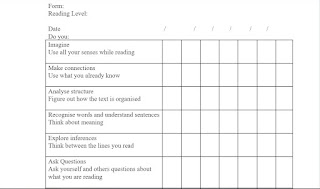
| Literacy Strategy: Teaching Reading Skills (click on the image to access the document) |
|
| Literacy Strategy: P.E.T.A.L (Click on the link to access Mr. Spruyt's Google site) |
Monday, March 28, 2022
Week 9 Term 1 - Monitoring Progress (Mar 28 - Apr 1)
CURRENT SITUATION: of the immediate present; in progress
The last few weeks of term are typically academic driven. We should be at a stage where we are closing the loop on internal assessments and finishing text studies but the nature of Term 1 has been quite disruptive. Our landing spot looks a little different at this stage in the term, with student attendance low (to both online and onsite classes) due to COVID 19 including ourselves having to isolate throughout the term, our current position is somewhat - challenging. However I read something this week that spoke about the position that we are in our own lives. If we find ourselves in a challenging situation or in a situation that we are happy to be in, regardless of the nature of it, we are called to be in that position for a reason. What we do and how we approach the position that we are in will determine how we experience it.
The position that I am currently in with my akonga is one where we are playing catch up and trying to finish work. For the most part, playing catch up has been my place of residence with my students. We are always finding new ways or nurturing well-oiled ways that work, when it comes to monitoring and tracking student progress. Monitoring the progress (or lack thereof) has been a focus for myself over the last 2 and half weeks. There are a few things that work well for me that I want to share and also there is one way of monitoring progress that I am hoping to integrate into my work in Term 2.
TRACKING SHEETS: the act or process of following something or someone
| My tracking sheet for 2022 (Level 2) |
Tracking sheets were introduced a few years ago, as a way to manage student's work. The aim of the tracking sheets is to have a centralized document that documents all internal assessments, external assessments and tests that the students undertake throughout the area. During my isolation period when I was from home, the tracking sheet was a useful tool that helped me monitor student progress. In particular with my Level 2 and Level 3 NCEA English students, I was able to track their assessments and provided some feedback. It is a clear and simple system that gives me a sense of control when managing and tracking my student's progress. For my Year 9 students, I have started to fill out their tracking sheet with their PAT Reading Comprehension Test and Asttle Writing Test results. I can see where they are at and it is a good visual reminder on what I need to do to help them go forward. As many students were staggering back to school (from isolation) the tracking sheet allowed me to track students who did not complete the test and I could follow up with them. I check this daily to make sure that I am following all of my students progress closely, even though we have Hapara Teacher Dashboard as a way of monitoring their work, I find that this (Google Spreadsheet) is easier to manage and work with.
FEEDBACK: If you get feedback on your work or progress, someone tells you how well or badly you are doing, and how you could improve. If you get good feedback you have worked or performed well.
| Feedback to my Level 3 student for their 91480 Assessment |
I have reflected on what meaningful feedback should look in regards to the feedback we give our akonga. Since writing the reflection, I have made sure that the feedback has clear expectations, that I affirm what they have done well and use this as leverage when I give my suggestions and finally, I personalize it in a way that is fitting to the student. This takes time, but it does work in the end. I have spent time with my students to talk them through the feedback, to ensure that they do understand what I need from them. I get the sense that the students feel a little bit more confident in what they are doing when I give them positive affirmation - not just a laundry list of things that they need to do. I try to provide feedback once a week so that the students have something to work with throughout the week (whether they are working onsite or online). As we are working in a Hybrid Learning environment, feedback can often be the only type of communication I have with the student throughout the week so I have make sure that it is meaningful and worth it.
ATTENDANCE: the action or state of going regularly to or being present at a place or event.
| An excerpt from our Totara House Attendance Tracking Sheet |
I have outlined some of the things that I do to monitor my student's work as an English teacher. I have used the same approach with my students in my whanau group, in role as Whanau/House Dean. An area that it is constantly reviewed and scrutinized is attendance. Over the last two years, our attendance has fluctuated due to the disruption of the pandemic. With so many students isolating at home, working or reluctant to return to school, attendance has and will continue to be a focus for those us involved in pastoral care. It is a huge area to unpack and analyze, it takes and needs time to be explored. I have created another Google spreadsheet for my Whanau/House that is shared weekly with my mentorship team. The Google spreadsheet holds the weekly attendance data for the 8 classes in my Whanau group, the mentors are able to add updates on students in their mentor classes. I am also able to refer certain students to the mentors (students who I feel need to be contacted by their mentor teachers). It is an open document so that all of the mentors can access each other's class tab and add information if they know anything. I have also shared this with the Director of Deans, Director of Pastoral and the Pastoral team. I update this weekly and use this as a focal point in our discussions when we do meet. For me, it is a good way to centralize our Whanau/House specific attendance data so that I am not having to sift through everyone's data on KAMAR.
WORKSPACE: Hapara Workspace is a platform for teachers and learners to create highly personalized learning experiences that deepen collaboration and differentiation throughout the learning cycle. Teachers are able to streamline the process by tracking progress, submissions, and providing feedback to their learners.
| Mrs Harde's NCEA Level 2 English Workspace |
Over the last 10 years, I have been inundated with all types of educational online tools. Hapara Workspace is one of those tools that I have yet to add to my toolkit, but I am hoping to integrate this into my online learning space in Term 2. My focus group will be my NCEA Level 2 (201ENG) class and I will be trialing Workspace with them for their Term 2 Internal Assessment (91104 - Connections Essay). My fellow colleague and English Department member, Mrs Pravina Harde, is quite experienced with Workspace and was able to share this with our team at our Department Planning Day in Term 4 2021. I really liked how she used the app and how her students knew how to access it and use it well (even in her absence). Mrs Harde has created a Level 2 English Workspace that I am going make a copy of and then modify to fit my class. I am hopeful that this will be another effective way of tracking and monitoring student progress.
I have made a deliberate attempt to integrate all of these monitoring measures in my weekly routine at school. It gives me a sense of 'control' over what I can control and manage. I do know that student achievement and attendance will always have gaps, that will not change. However how I approach it and try to monitor it, in some ways helps me grapple with it as it can be quite overwhelming. These measures are result of my experiences with our first lockdown in 2020. It is way of keeping me accountable to my students and the teams that I work with. It is also a way of keeping me in line and on the pulse with what is going on with my students.
Tuesday, March 22, 2022
Week 8 Term 1 - Adjusting the Approach (Mar 21 - 25)
At the beginning of the year, the English Department had a plan in place for our NCEA students. We wanted to ensure that we were all on the same page - literally team teaching the same text and assessment for the first part of Term 1. Our goal (which still remains) was to ensure that our students were able to bank some early credits through our visual text study focusing on the Close Viewing Assessment. Across all three year levels (NCEA Level 1, 2 and 3 English) our students spent the first three and half weeks fully immersed in our visual text study. Our Level 1 students delved into Tim Burton's 1990's classic 'Edward Scissorhands', our Level 2 students got familiar with the local director, James Napier Robertson's 'The Dark Horse' and our Level 3 students dug deep into 2013's Martin Scorsese's hit 'The Wolf of Wall Street'.
Our intention was to get through the study of the visual text and start the assessment by Week 4 and Week 5. However as soon as community transmission of COVID 19 impacted our school whanau, our plan came to a halt. From Week 5 to Week 7, our dedicated English Department have been working overtime to try and get our students back into the routine of school on top of catching up with their Close Viewing Assessment. The initial due date for the Close Viewing Assessment was March 18 (Week 7). We knew that the return on this assessment would be low due to so many of students who have been absent due to COVID 19. We wanted to push through any way to see how many students completed the assessments. We met on Monday March 21 (Week 8) to discuss the Close Viewing Assessment. In our discussion, we spoke about the students who completed the assessment and those who did not submit. We also discussed how we needed to adjust our approach, taking into consideration the disruption that our students have experienced this term. Here are some of our findings from the meeting.
| NCEA Level 1 English 2022: Overview of the L1 Close Viewing Assessment. |
|
|
| Our plan for Week 8 + Week 9 |
Tuesday, March 15, 2022
Week 7 Term 1 - Meaningful Feedback (Mar 14 - 18)
It has been a bit of a mission trying to teach online (whilst in isolation). Teaching from home whilst some of my students who are onsite whilst the others are online (in isolation) has been challenging. A structured hybrid learning structure is the approach that our school has taken on as our response to COVID-19. The benefits in this structure of learning is that the workload for both teacher and student is lessened, working in an environment that is constantly changing due to a pandemic can be challenging and stressful. For staff working onsite and from home, this type of learning structure gives us the flexibility to work within our means and within a COVID landscape.
The risks with Hybrid learning are that we lose time with our students as we are not operating by the normal timetable. Student engagement is relatively low (whether onsite or online) and this can cause issues later on with their progress. I think teaching online and onsite can be a challenge as you cannot fully give a 100% to students who are working from home (especially if you are managing students onsite in the classroom). As I have spent the last week and a half in isolation, I found the hybrid learning structure a bit of struggle - trying to maintain momentum and structure with my students (in class and online).
During my recent stint in isolation, I have focused on what I can do instead what I am limited to. What I have been able to do and focus on, is feedback for my Senior class (Level 2 and Level 3 English). Both of my classes are currently working on their first internal assessment - Close Viewing of a Visual Text. What I learnt over the last two weeks is that feedback is important but needs to be effective. Effective in that the student is able to unpack and understand my thoughts, opinions and suggestions. Effective in that it is not just about 'what they need to improve' but also celebrating what they have done so far and affirming their efforts. I have spent hours giving feedback on areas for improvement (which is not a bad thing, it is necessary). I do not think that my students (at the time) engaged with it the way I wanted to them to. Some of things that I have found to work with creating and sharing 'meaningful feedback' will be outlined below.
CLEAR EXPECTATIONS: It is about helping people understand the bigger picture. With this bigger picture, people will understand better and commit more easily
| Teacher feedback example |
| Teacher feedback example |
| Teacher feedback example |
Thursday, March 10, 2022
Week 6 Term 1 - Literacy Project 2022: Department Self-Review: Specific Actions (Mar 07 - 11)
What can we do as kaiako to ensure that we promote literacy in our classes?
- Marc has been wonderful with my Y9s and I value both his and Dr Jannie’s input and advice during my Y9 classes and would appreciate their continual support.
- Marc has done evaluations during his time in my class and we are working on strategies, based on the outcomes of these evaluation.
- Take help from Marc and Jannie to create literacy programs for our class
- Have discussions with our students about literacy and why this is important for them in their learning journey.
- Use literacy strategies
- Work with Dr Jannie + Marc in the classroom with our students (especially those who need literacy support)
- Inform my Year 10 mentoring group about upcoming NCEA changes, as future NCEA Level 1 students, in regards to numeracy and literacy.
What actions can we take to learn more about our akonga?
- Literacy survey
- Surveys
- One on One Conversation
Select each letter and create new words until the time is out.
More word games in one game just for you ready to play!
Play smart with a free casual crossword game on your laptop.
Online multiplayer game with scrabble words and letters to..
Rearrange letters online with your friends and twist like pro..
Try new crossword scrabble every day by day with clues.
Find real words inside the table to finish the game because..
- Unpacking the data: Continual discussions and analyzing of student data is required - really unpacking and deep divining into the literacy data is key and that is where our literacy experts come in to help all of us to understand.
- Department + Appraisal goal: Our department goal and individual appraisal goals all feature a connection to literacy - this is one way of tracking teacher progress and engagement with literacy.
Wednesday, March 2, 2022
Week 5 Term 1 - Momentum (Feb 28 - March 4)
Week 9 Term 3 - Teacher Practice: Understanding Character - 91925 Character Essay (September 14 - September 18)
Character Profile This essay plan is designed to help you dig deep into the characters of The Dark Horse. It kicks off by setting the stage...
-
I have only just started blogging. Why? For a while, I have felt this need to write my reflections and thoughts on my teaching pract...
-
The theme for Samoan Language Week 2019 is: Lalaga Le Si'osi'omaga mo se Lumana'i Manuia (Weave an environment for a bet...
-
An important lesson that I have learnt when it comes to leadership is that there is value and power in sharing and collaborating. Each of th...